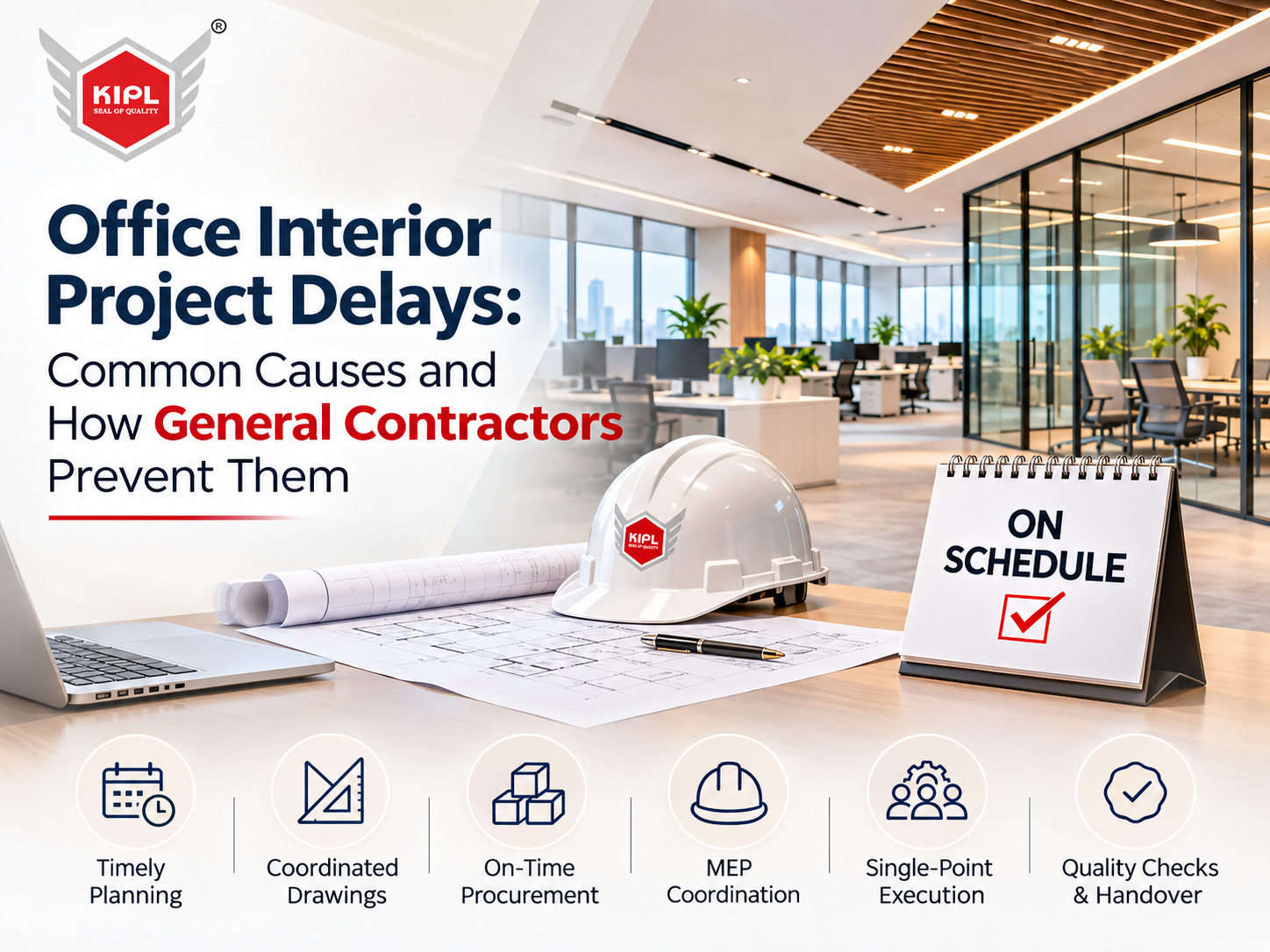
Office Interior Project Delays : Common Causes and How General Contractors Prevent Them
Office interior projects are often tied to fixed business dates. A company may have a lease starting, employees waiting to move, technology teams preparing systems, and management expecting the new workplace to become operational on time.
When an office fit-out is delayed, the impact can go beyond construction. Businesses may face additional rent, extended temporary-office costs, delayed employee relocation, repeated vendor visits and disruption to planned operations.
For businesses planning a commercial office fit-out in Mumbai, understanding what causes delays is important. Most project delays do not begin with the final finishing work. They often start much earlier through incomplete requirements, late approvals, poor coordination or delayed procurement. Current Mumbai fit-out guidance similarly identifies weak briefs, design changes, long-lead procurement, approval cycles and MEP clashes as major causes of schedule slippage. A professional general contractor in Mumbai helps control these risks by coordinating design information, contractors, procurement, site activities and approvals through one structured project programme.
Incomplete Project Requirements
One of the earliest causes of delay is starting a project before the client’s requirements are properly defined. Workstation numbers, meeting-room requirements, cabins, storage, technology needs and future expansion should ideally be agreed before detailed execution begins. If these requirements continue changing after site work starts, even a small layout revision can affect partitions, electrical points, HVAC, ceilings, furniture and data infrastructure. A professional general contractor works with the client and design team to clarify important requirements before affected work packages begin. This gives the execution team a more stable basis for scheduling and procurement.
Starting Execution Before Drawings Are Ready
Construction should not move faster than the information required to execute it correctly. Incomplete working drawings can result in contractors repeatedly seeking clarifications on site. In more serious cases, completed work may need to be removed and rebuilt after the final design is issued. Coordinated drawings for architectural work, electrical systems, HVAC, ceilings, fire services, data and furniture should therefore be prepared and reviewed before relevant execution starts. Recent commercial fit-out guidance consistently identifies incomplete drawings and late design changes as major sources of rework and delays. A general contractor helps control drawing revisions and ensures site teams work from the latest approved information.
Poor MEP and Interior Coordination
Modern office interiors contain several technical services within limited space. The same ceiling area may contain electrical cables, lighting, HVAC ducts, diffusers, sprinklers, smoke detectors and data infrastructure. If each contractor works independently, clashes can occur during installation. A duct may interfere with a light fitting, a sprinkler may conflict with a ceiling feature, or an electrical point may end up behind fixed furniture. Correcting these problems after installation consumes both time and money. A professional commercial interior contractor in Mumbai coordinates architectural and MEP services before installation and conducts site checks before concealed work is closed.
Delayed Material Selection and Procurement
Interior projects depend on materials arriving at the right stage of the project. Flooring, lighting, glass, laminates, hardware, furniture, acoustic materials and HVAC equipment can all have different lead times. When material selections remain pending after execution starts, procurement also gets delayed. Long-lead products can then become part of the project’s critical path. Current Indian fit-out guidance identifies late material decisions and long-lead procurement as recurring causes of missed handover dates. A general contractor helps by preparing procurement schedules, identifying long-lead materials early and tracking deliveries against the overall project programme.
Building Management and Approval Delays
Commercial buildings in Mumbai often have specific fit-out procedures. Building management may need to review drawings relating to HVAC, fire systems, electrical work, contractor access or other modifications. Sites may also have restricted work timings, material movement procedures and service-lift schedules. If these requirements are discovered only after construction begins, the project schedule can be affected. Experienced office fit-out contractors in Mumbai review building guidelines at an early stage and coordinate submissions alongside design development. This is especially important in Grade-A commercial towers and high-rise properties where fit-out activities may need to follow strict property-management procedures.
Multiple Contractors Working Without One Schedule
A commercial interior project may involve civil contractors, electricians, HVAC technicians, ceiling installers, flooring teams, carpenters, furniture suppliers and technology vendors. The problem is not the number of specialists. The problem occurs when everyone works according to a separate schedule. One team’s delay can prevent another contractor from starting. A general contractor creates one master project programme that identifies activity dependencies and defines when different teams need to enter and leave the site. This creates better sequencing and reduces idle time between activities.
Slow Client Approvals
Contractors are not always the reason projects get delayed. Pending decisions regarding layouts, colours, furniture, samples, finishes or additional requirements can stop dependent work. For example, flooring cannot be purchased until the material is approved. Custom furniture cannot begin manufacturing until dimensions and finishes are confirmed. A professional project-management process therefore includes an approval tracker with clear decision dates. Keeping approvals documented also prevents confusion about which option was finally accepted.
Scope Changes During Execution
Changes are sometimes unavoidable. A business may decide to increase seating, create an additional cabin or upgrade meeting-room technology after construction has already started. However, every change has a potential impact on the project. The general contractor should assess how the revision affects drawings, materials, cost and timeline before executing it. A clear change-control process prevents informal site instructions from creating hidden schedule problems later.
Unclear BOQ and Project Scope
A weak or incomplete Bill of Quantities can create disagreements during execution. If certain items are not clearly included, the client and contractor may need to discuss additional costs or responsibilities after work has already started. This can delay decision-making and procurement. A detailed BOQ should clearly describe project quantities, material specifications, inclusions and exclusions before execution. Recent fit-out timeline guidance also identifies incomplete BOQs and tender information as a common source of scope clarification and programme delay.
Insufficient Time for Testing and Snagging
An office is not ready simply because the furniture has been installed. Electrical systems, lighting, HVAC, plumbing, data infrastructure and other services need appropriate testing. Finishes also need to be inspected and minor defects corrected. When testing and snagging are not included in the original schedule, the project can appear complete while still requiring several days of corrective work. Indian office fit-out guidance typically treats testing, snagging and handover as a distinct final phase rather than an optional extra. General contractors help by planning this stage before the client’s actual move-in date.
Why Early Planning Matters More Than Fast Execution
Businesses sometimes try to recover time by pushing contractors to work faster after delays have already occurred. However, the most effective way to shorten an office fit-out is usually to make important decisions earlier. Requirements should be frozen early, drawings coordinated before installation, long-lead materials ordered on time and building approvals started before they become urgent. Recent project guidance consistently shows that many delays originate before site execution rather than during the final construction stage. Strong pre-construction planning gives the site team a better chance of completing the project according to schedule.
General Contracting with Kshatriya Infrastructure
Kshatriya Infrastructure Pvt Ltd understand that successful commercial interior execution requires careful coordination between design, procurement, contractors, technical services and project timelines. Our general contracting services in Mumbai focus on structured execution across civil works, commercial interior fit-outs, MEP coordination, project management and final handover. By bringing multiple project activities under one coordinated execution process, we help businesses reduce avoidable rework, improve project visibility and manage their workplace fit-out more efficiently.
For companies planning a new office, commercial interior fit-out or office renovation in Mumbai, selecting an experienced general contractor can play an important role in keeping the project organised from planning through final completion.