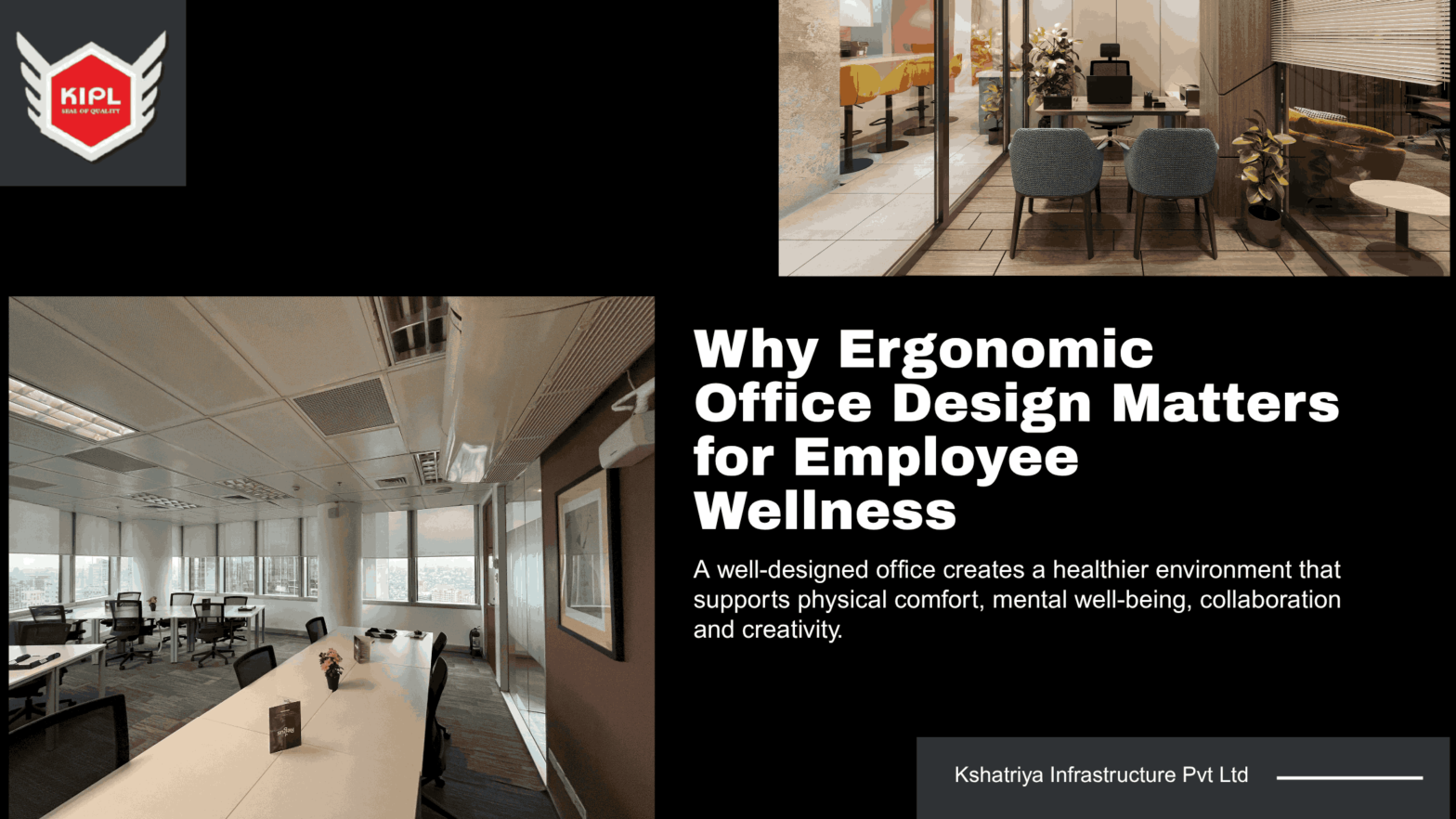
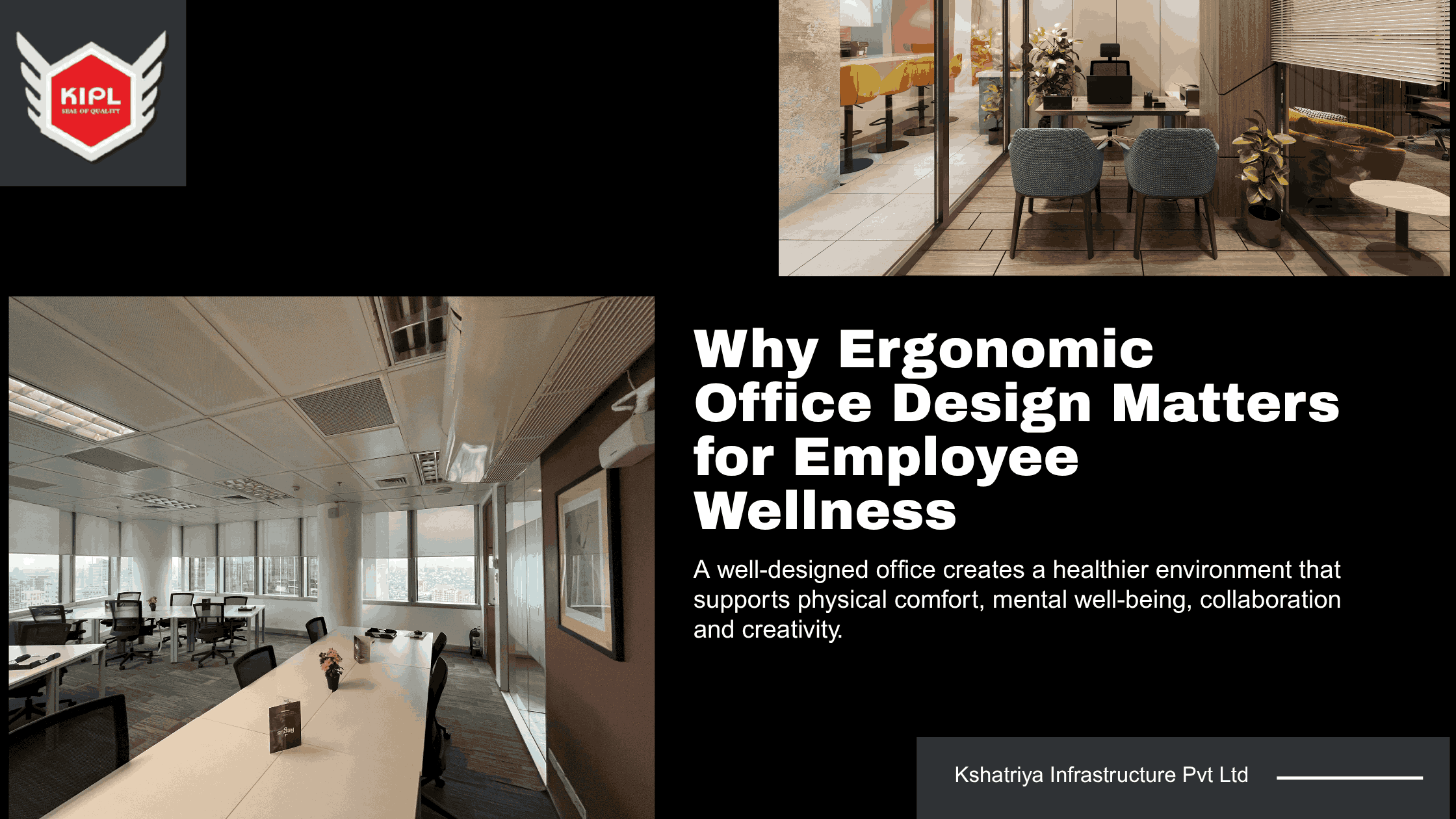
Why Ergonomic Office Design Matters for Employee Wellness
Modern businesses are realizing that the quality of a workspace directly impacts employee health, productivity, creativity, and overall business performance. One of the most important elements of a successful workplace is ergonomic office design. Companies across Mumbai and India are increasingly investing in ergonomic office interiors to create healthier, more comfortable, and more efficient work environments. Ergonomic office design focuses on creating workspaces that support the natural movement, posture, and comfort of employees. It combines functionality, comfort, and aesthetics to reduce physical strain and improve workplace wellness. From ergonomic chairs and height-adjustable desks to lighting, space planning, and air quality, every aspect of office interior design plays an important role in employee well-being.
Modern employees spend long hours sitting in front of computer screens, attending meetings, and performing repetitive tasks. Poorly designed offices can lead to physical discomfort, stress, fatigue, and health issues such as back pain, neck strain, headaches, and poor posture. Over time, these problems reduce employee efficiency and increase absenteeism. Ergonomic office interiors solve these challenges by designing spaces that promote comfort, movement, and better working conditions. The demand for ergonomic office interior design in Mumbai has grown rapidly as companies prioritize employee satisfaction and workplace performance. Businesses are now looking beyond traditional office layouts and focusing on employee-centric workspaces that improve overall wellness while enhancing brand image and workplace culture. One of the biggest benefits of ergonomic office design is improved employee productivity. When employees work in a comfortable environment with proper seating, lighting, and workspace arrangements, they can focus better and work more efficiently. Comfortable employees experience fewer distractions caused by physical discomfort, allowing them to maintain concentration for longer periods. An ergonomically designed office helps employees feel energized, motivated, and engaged throughout the workday.
Ergonomic office chairs are among the most important components of workplace wellness. Employees who sit for extended hours need proper lumbar support, adjustable armrests, and seating positions that maintain healthy posture. Poor seating arrangements often lead to spinal issues, muscle strain, and fatigue. High-quality ergonomic chairs reduce pressure on the back and neck while improving posture and comfort. Adjustable desks are another growing trend in modern office interiors. Sit-stand desks allow employees to alternate between sitting and standing positions during work hours, reducing the health risks associated with prolonged sitting. These desks encourage movement, improve blood circulation, and reduce fatigue, helping employees remain active and productive throughout the day. Lighting also plays a major role in ergonomic office design. Poor lighting causes eye strain, headaches, and reduced concentration. Modern office interior designers focus on maximizing natural light while combining it with balanced artificial lighting solutions. Proper lighting improves employee mood, energy levels, and overall workplace atmosphere. Offices with large windows, glass partitions, and open layouts often create brighter and more inviting workspaces. Space planning is another essential aspect of ergonomic office interiors. A cluttered and poorly organized office creates stress and limits employee movement. Smart space planning ensures employees have sufficient personal workspace while maintaining smooth movement throughout the office. Efficient layouts improve collaboration, communication, and operational flow while creating a more organized work environment.
Modern commercial interior design also focuses heavily on employee wellness zones. Businesses are creating breakout spaces, lounge areas, collaborative zones, and relaxation corners to support mental wellness and reduce workplace stress. These spaces encourage creativity, teamwork, and work-life balance while improving employee satisfaction. Acoustic comfort is another important factor in ergonomic office design. Excessive noise in workplaces can reduce concentration and increase stress levels. Acoustic panels, carpets, ceiling treatments, and soundproof meeting rooms help create quieter and more focused work environments. Modern office interior solutions aim to balance collaboration with privacy to improve workplace comfort.
Indoor air quality is equally important in maintaining employee wellness. Poor ventilation and air circulation can negatively impact employee health and productivity. Modern office fit-out services now include air purification systems, ventilation improvements, and the use of indoor plants to create healthier workspaces. Green office interiors not only improve air quality but also create calming and visually appealing environments. Color psychology is another element widely used in ergonomic office design. Different colors influence employee mood and behavior. Blue tones promote focus and productivity, green creates a calming atmosphere, and yellow encourages creativity and positivity. Commercial interior designers strategically use colors to create balanced and motivating work environments. Technology integration has also become a major part of ergonomic office interiors. Smart office solutions such as automated lighting, climate control systems, wireless connectivity, and cable management systems help create seamless and organized workspaces. Employees can work more efficiently when technology is integrated smoothly into the office environment.
Employee wellness is no longer limited to physical health. Mental wellness has become equally important in modern workplace design. Offices designed with natural elements, comfortable furniture, collaborative areas, and wellness spaces help reduce stress and improve employee morale. Businesses that invest in employee wellness through office interiors often experience higher employee retention and job satisfaction. Ergonomic office design also supports hybrid work environments. As businesses adapt to flexible work models, offices are being designed with multi-functional workspaces, collaborative meeting areas, and adaptable seating arrangements. Flexible office layouts allow businesses to optimize space utilization while supporting changing work styles. Commercial office interior design in Mumbai has evolved significantly with the growing demand for modern and employee-focused workplaces. Businesses now understand that office interiors directly impact company culture, employee experience, and business performance. A well-designed ergonomic office creates a positive atmosphere where employees feel valued and motivated. Reception areas and meeting rooms are also being designed ergonomically to improve comfort and functionality. Comfortable seating, proper lighting, acoustic balance, and modern furniture create welcoming and professional environments for both employees and visitors. Conference rooms designed with ergonomic principles improve collaboration and meeting efficiency.
Storage solutions are another key part of workplace ergonomics. Organized storage systems reduce clutter and improve workspace efficiency. Modern office interiors use modular storage units, concealed cabinets, and multifunctional furniture to maintain clean and productive work environments.
Biophilic design is becoming increasingly popular in ergonomic office interiors. This design concept integrates natural elements such as plants, wood textures, natural lighting, and water features into office spaces. Biophilic office designs improve mental wellness, reduce stress, and create healthier work environments. Employees working in nature-inspired spaces often feel more relaxed and creative. Flooring materials also contribute to employee comfort. Anti-fatigue flooring, carpet tiles, and noise-reducing materials improve workplace comfort and safety. Commercial interior contractors carefully select flooring materials that support durability, aesthetics, and employee wellness. Modern ergonomic office design also considers accessibility and inclusivity. Offices are being designed to accommodate employees with different physical abilities by including accessible pathways, adjustable furniture, and user-friendly layouts. Inclusive office design helps businesses create supportive and diverse workplaces.
The role of commercial interior contractors in ergonomic office design is extremely important. Experienced contractors understand how to combine aesthetics, functionality, and employee wellness into a single workspace solution. From material selection and furniture planning to lighting and layout optimization, professional office interior designers help businesses create productive and future-ready workspaces. Turnkey office interior solutions have become popular among businesses looking for efficient and hassle-free office transformations. Turnkey solutions include planning, designing, execution, furniture installation, electrical work, lighting, and finishing under one project management system. This approach ensures consistency, quality control, and timely project completion. Investing in ergonomic office design also strengthens employer branding. Companies with modern and employee-friendly workplaces attract top talent more effectively. Employees today prefer workplaces that prioritize comfort, wellness, and flexibility. A thoughtfully designed office reflects a company’s commitment to employee well-being and professional growth. Ergonomic office interiors are also cost-effective in the long term. While the initial investment may seem higher, businesses save money through improved productivity, reduced absenteeism, lower healthcare costs, and better employee retention. Healthy employees contribute more effectively to organizational success.
Sustainability is another growing trend in office ergonomics. Businesses are adopting eco-friendly materials, energy-efficient lighting, recycled furniture, and sustainable construction methods to create environmentally responsible workspaces. Sustainable office interiors improve both employee wellness and environmental impact. The future of office interior design is strongly connected to employee wellness and workplace experience. Offices are no longer designed only for operational purposes but also to support employee happiness, collaboration, and creativity. Businesses that invest in ergonomic office interiors position themselves for long-term growth and success. Commercial office spaces in Mumbai and across India are rapidly transforming into modern, flexible, and wellness-focused environments. From startups and IT companies to corporate offices and coworking spaces, ergonomic design has become an essential part of workplace planning. Organizations understand that healthy and happy employees are the foundation of a successful business.
In conclusion, ergonomic office design plays a vital role in improving employee wellness, productivity, and workplace satisfaction. A well-designed office creates a healthier environment that supports physical comfort, mental well-being, collaboration, and creativity. Modern businesses are increasingly investing in ergonomic office interiors to create workplaces that inspire employees and enhance overall business performance. From ergonomic furniture and smart lighting to wellness zones and sustainable materials, every element of office interior design contributes to creating a better workplace experience. As businesses continue to evolve, ergonomic office design will remain one of the most important investments for creating successful and future-ready workspaces.