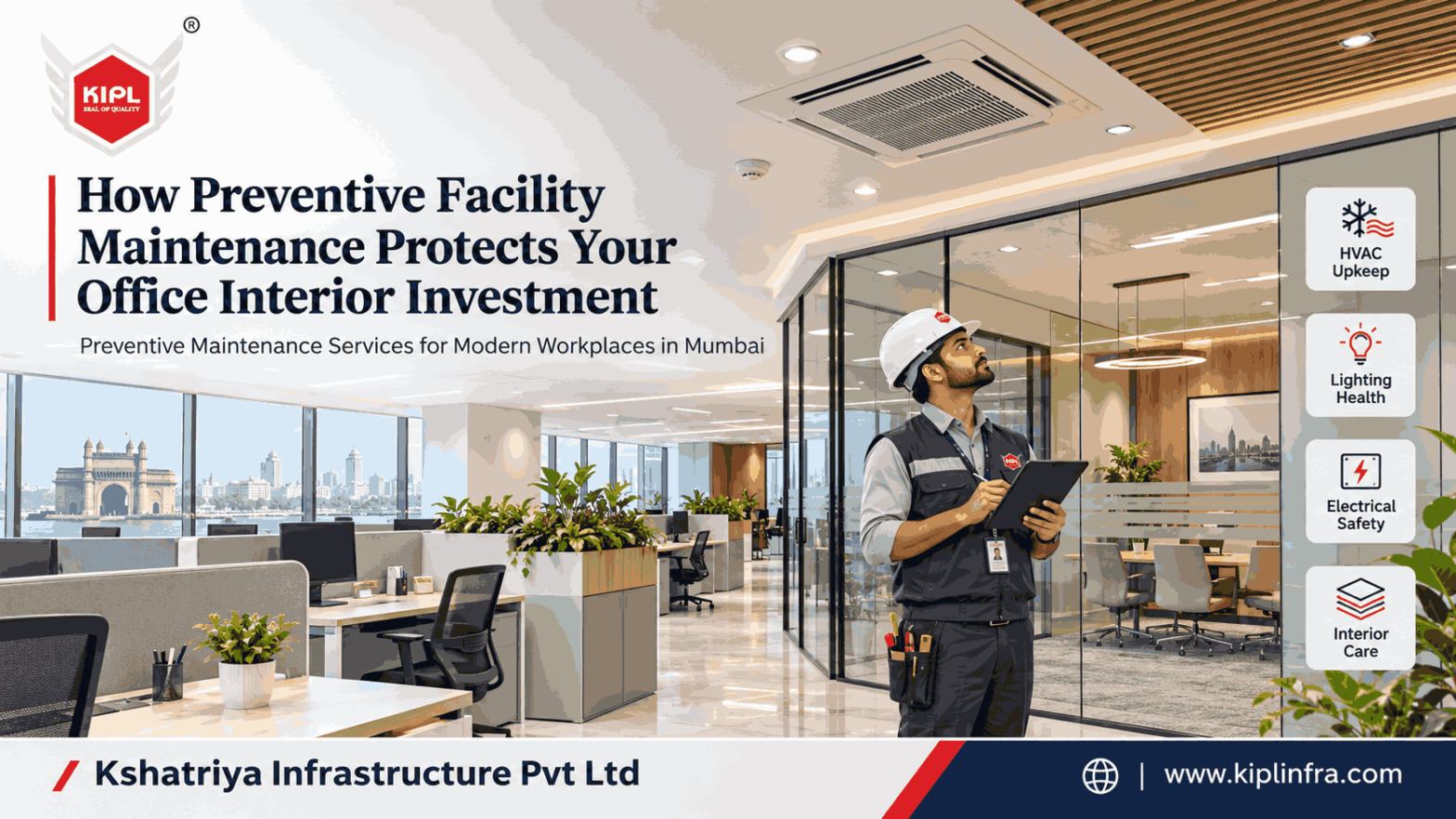
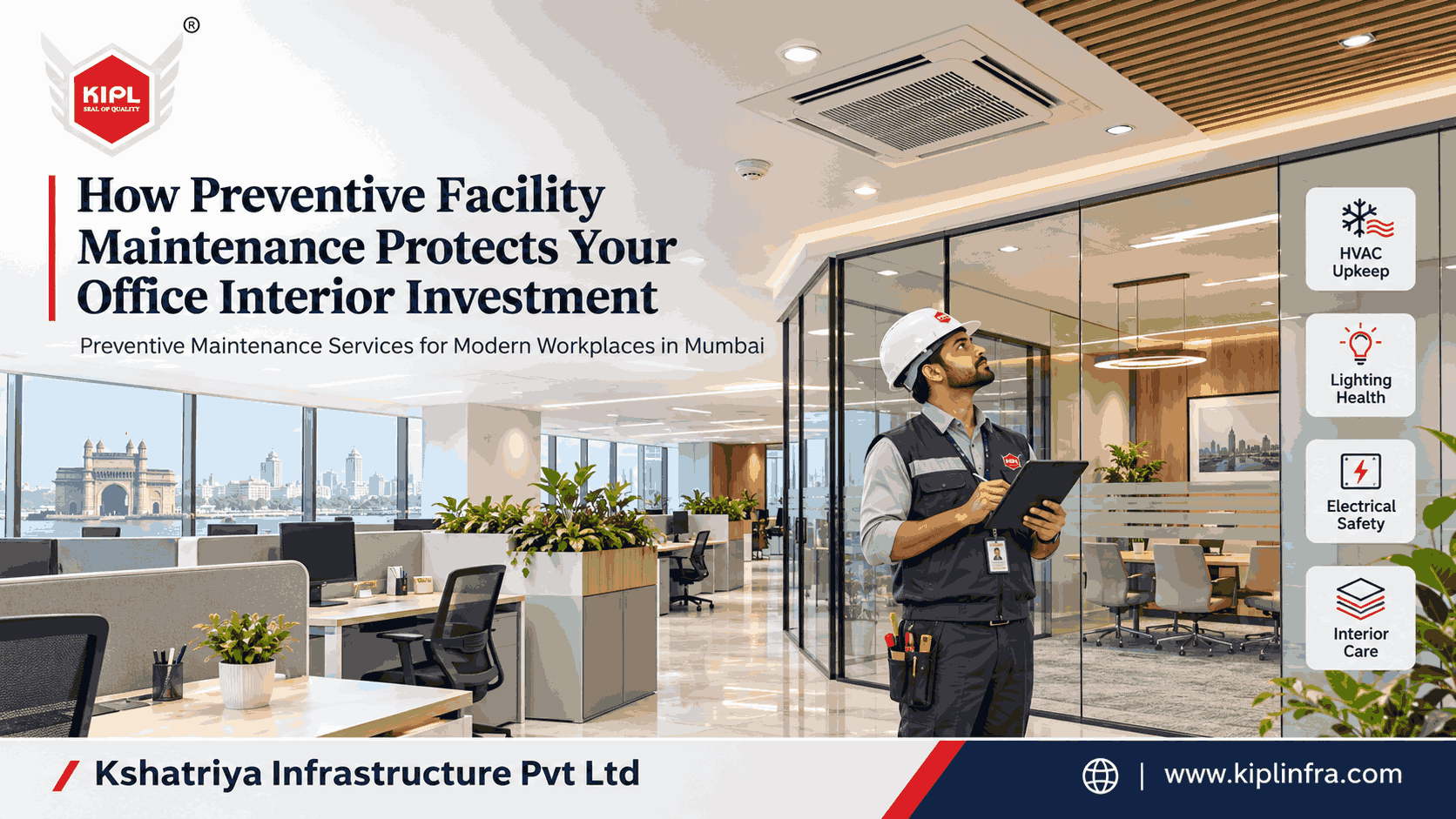
How Preventive Facility Maintenance Protects Your Office Interior Investment

How Preventive Facility Maintenance Protects Your Office Interior-KIPL Mumbai
How Preventive Facility Maintenance Protects Your Office Interior-KIPL

How Preventive Facility Maintenance Protects Your Office Interior Investment

A professionally designed office is a significant business investment. Flooring, ceilings, lighting, furniture, HVAC systems, electrical infrastructure, glass partitions and custom finishes all contribute to the value and performance of the workplace.

However, once the office fit-out is completed, protecting that investment becomes just as important as creating it.

This is where preventive facility maintenance in Mumbai plays an important role. Instead of waiting for systems to fail or finishes to deteriorate, preventive maintenance focuses on scheduled inspections, servicing and early corrective action. This helps businesses protect office interiors, reduce avoidable repair costs and maintain a professional workplace over the long term.

Why Office Interiors Need Preventive Maintenance

Office interiors are used every day. Workstations, chairs, flooring, lighting, air conditioning and technical systems experience continuous wear. Without regular maintenance, small issues can gradually become larger problems. A minor water leak can damage ceilings or flooring. Poor HVAC performance can affect employee comfort. Loose hardware can damage doors or furniture. Electrical faults can interrupt workplace operations. A structured facility management service in Mumbai helps identify these problems early before they affect larger parts of the office. Preventive maintenance is therefore not only about maintaining equipment. It also helps protect the overall condition and appearance of the workplace.

Protecting HVAC Systems and Interior Comfort

HVAC systems are among the most important components of a commercial office. Poorly maintained air-conditioning can lead to uneven cooling, excess humidity, water leakage and reduced indoor comfort. In some cases, condensation or drainage problems may also damage ceilings, walls or nearby finishes. Regular HVAC inspection and servicing can help identify these issues before they become serious. Professional HVAC maintenance services in Mumbai can also support more reliable workplace operations and help extend the service life of equipment. Preventive maintenance is widely used in facility management because routine maintenance can reduce unforeseen failures and protect asset life.

Electrical Maintenance Protects Workplace Infrastructure

Modern offices depend heavily on electrical systems. Lighting, workstations, conference rooms, IT equipment, pantry appliances and security systems all rely on properly functioning electrical infrastructure. Loose connections, overloaded circuits or damaged components can create operational problems and may also affect expensive office equipment. Regular electrical inspections help identify potential issues early. A professional technical facility management service in Mumbai can maintain electrical systems through planned inspections and servicing, helping reduce unexpected breakdowns and protect both infrastructure and office equipment.

Preventing Water Damage

Water-related problems can quickly damage commercial interiors. A small plumbing leak may affect wooden furniture, carpet, wall finishes, ceilings or electrical systems if it is not identified quickly. Preventive facility maintenance includes regular inspection of plumbing connections, drainage systems, pumps and utility areas. This is particularly important for pantry areas, washrooms and other spaces where plumbing systems are used regularly. Early detection can significantly reduce the amount of repair work required later.

Protecting Flooring and High-Traffic Areas

Flooring is one of the most heavily used elements in any commercial workplace. Carpet tiles, vinyl, stone and other materials can deteriorate faster in reception areas, corridors, meeting spaces and workstation zones. Professional facility management combines routine cleaning with periodic inspection so damaged areas can be addressed before the problem spreads.

For example, replacing a few damaged carpet tiles early is far more practical than replacing an entire section after prolonged wear. Regular maintenance helps office flooring maintain both its appearance and long-term performance.

Maintaining Furniture and Joinery

Workstations, storage units, reception counters and custom joinery represent another major part of the office interior investment. Loose hinges, damaged drawer runners, misaligned doors or minor surface damage should not be ignored. Small furniture repairs are generally easier and less expensive when handled early. A preventive maintenance programme can include regular inspection of office furniture and hardware so these issues are corrected before they develop into larger replacements.

Preserving Glass, Doors and Partitions

Modern commercial offices often use glass partitions and doors to create open, premium-looking workplaces. Over time, door hardware, hinges, seals and alignment may require adjustment. If these issues are ignored, they can lead to damaged hardware, difficult door movement or even glass stress. Periodic inspections help ensure that partitions and doors remain safe, functional and visually well maintained.

Protecting Ceilings and Interior Finishes

Ceilings often conceal important technical services such as HVAC ducts, electrical wiring and fire systems.

A technical issue above the ceiling can eventually affect the visible interior below. Water leakage, loose access panels, damaged lights or HVAC condensation can all affect ceiling finishes. Preventive facility maintenance helps identify these problems early and protect the finished office environment. The same approach applies to paintwork, wall panels and decorative surfaces. Early touch-ups can prevent minor damage from becoming visually noticeable across larger areas.

Preventive Maintenance Reduces Downtime

One of the biggest advantages of preventive maintenance is that it allows work to be planned. A scheduled service visit can be arranged outside peak business hours, while an emergency breakdown may interrupt employees during the working day. Current workplace trends are also moving toward smart building systems and predictive maintenance, with occupiers increasingly prioritising sensor-driven monitoring and proactive facility management. For businesses, this creates a more reliable workplace and reduces the risk of unexpected disruptions.

Asset Management Improves Maintenance Planning

An effective preventive maintenance program should be supported by accurate asset information. Businesses should know what equipment is installed, where it is located, when it was last serviced and when the next maintenance activity is required. This can include HVAC equipment, pumps, electrical panels, lighting systems, furniture and other important workplace assets. A structured asset register helps the facility management team plan maintenance more effectively and track equipment condition over time. This also supports better budgeting for repairs and eventual replacements.

From Reactive Maintenance to Planned Facility Management

Reactive maintenance begins after something has already failed. Preventive maintenance takes a more organised approach by identifying potential problems before they become urgent. For commercial offices, this can reduce emergency repairs, protect valuable finishes and help assets remain in better condition for longer. KIPL’s own workplace lifecycle approach already connects office fit-out with maintenance and ongoing facility operations, making preventive maintenance a natural continuation of the original office investment.

Protect Your Office Investment with Kshatriya Infrastructure

Kshatriya Infrastructure Pvt Ltd believe that a commercial interior project should continue to perform well long after handover. Our integrated approach connects commercial interior fit-outs, facility management, technical services, preventive maintenance and Build | Maintain | Operate solutions in Mumbai.

By combining project knowledge with ongoing facility support, businesses can protect their office interior investment, maintain asset performance and create a more reliable workplace over time. For organisations looking to extend the life of their office interiors and reduce avoidable maintenance costs, preventive facility management provides a practical long-term strategy.
Why Businesses Are Moving from Multiple Vendors to a Build, Maintain & Operate Model

Why Businesses Are Moving from Multiple Vendors to a Build, Maintain & Operate Model in Mumbai

Why Businesses Are Moving from Multiple Vendors to a Build, Maintain & Operate Model in Mumbai

Managing a commercial workplace often involves several different service providers. One company handles interior execution, another manages electrical and HVAC maintenance, another provides housekeeping, while separate vendors may be responsible for manpower, repairs and day-to-day facility operations. While this traditional approach may work initially, managing multiple vendors can become difficult as the workplace grows.

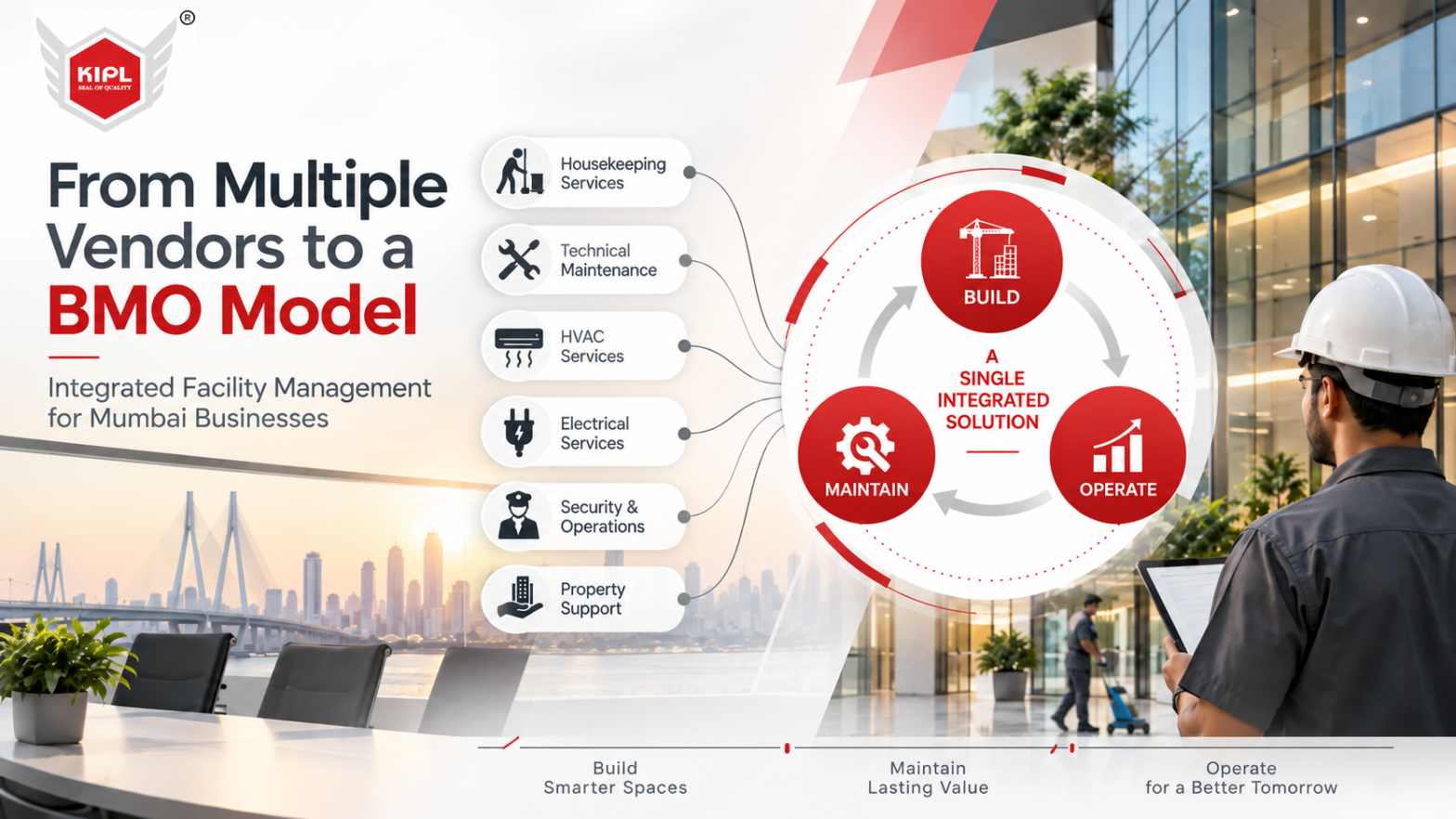
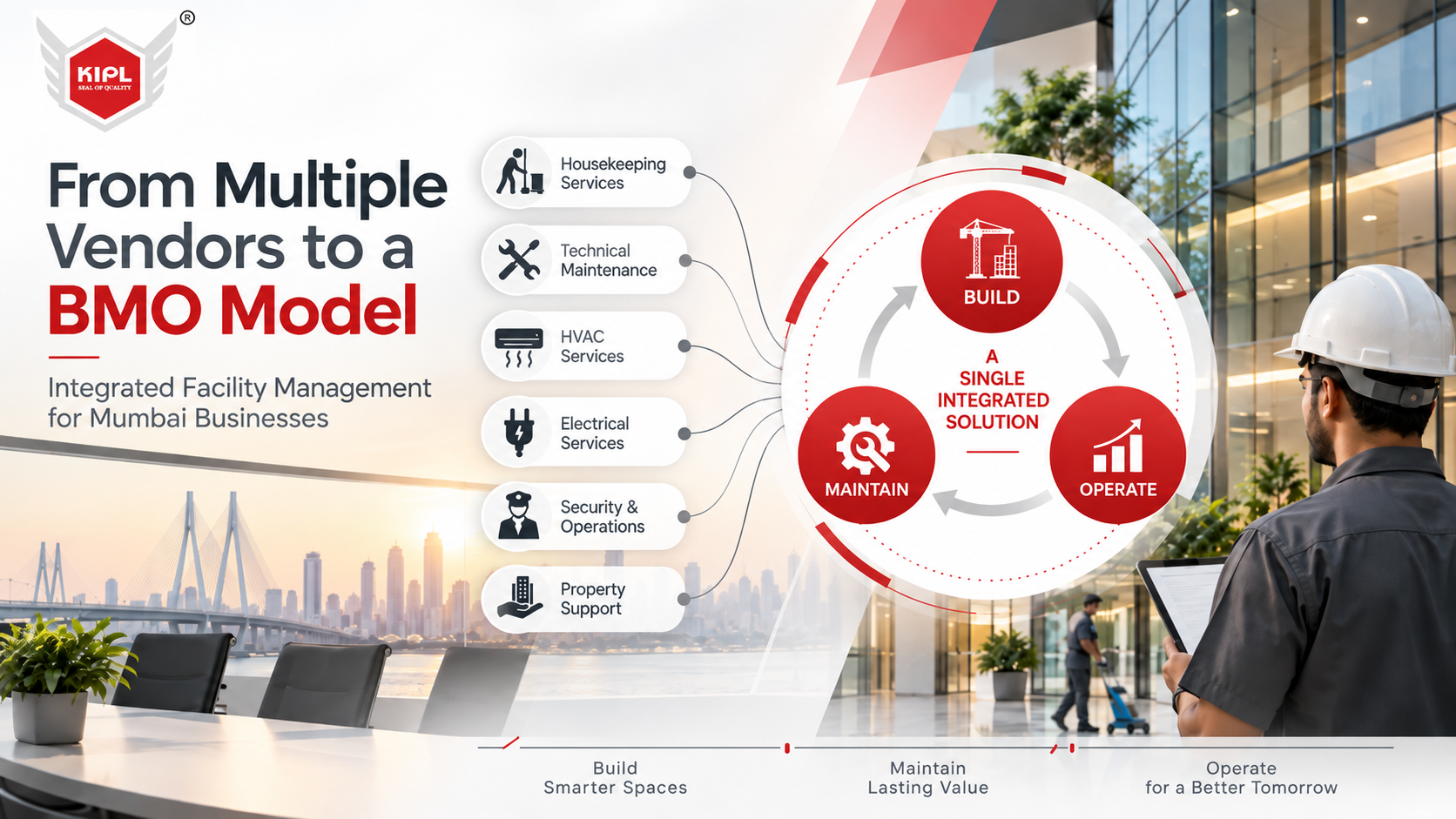
This is why many businesses are moving towards a more integrated Build, Maintain & Operate (BMO) model. Instead of managing different agencies independently, the BMO approach connects project execution, maintenance and facility operations through one coordinated lifecycle strategy. For businesses looking for integrated facility management services in Mumbai, this approach can provide better accountability, smoother communication and more organised workplace management.

The Challenge of Managing Multiple Vendors

A commercial property may require different specialists to keep everything functioning properly. The challenge begins when every service operates independently. One vendor may manage HVAC maintenance while another manages electrical systems. Housekeeping may report through a different supervisor, while project-related defects may need to be addressed by the original contractor.
When something goes wrong, the client often becomes the person coordinating between all these agencies. Different contracts, invoices, supervisors, service schedules and reporting systems can create additional administrative work. Recent facility-management industry discussions increasingly highlight the benefits of moving towards consolidated contracts, shared SLAs and single-point accountability rather than managing multiple disconnected service providers.

What Is the Build, Maintain & Operate Model?

The Build, Maintain & Operate model treats the workplace as one continuous lifecycle rather than three separate projects. The Build stage focuses on creating the commercial space through planning, interior fit-out, turnkey execution, technical coordination and project delivery. The Maintain stage focuses on protecting the building infrastructure through preventive maintenance, repairs, inspections and technical support. The Operate stage focuses on everyday facility management, workplace services and the activities required to keep the property functioning efficiently. Bringing these stages together creates greater continuity between how a workplace is built and how it performs after handover.

Better Coordination from Day One

One of the biggest advantages of the BMO model is better coordination between project execution and long-term operations.

When a contractor is focused only on completing the Build stage, the primary objective may be project handover. A lifecycle approach considers what happens after that handover. Maintenance accessibility, equipment servicing, technical systems and operational requirements can be considered during the project stage itself. This concept is increasingly recognised in lifecycle-management models, where maintainability and operational readiness are incorporated into design and construction rather than addressed only after completion. For the client, this can create a commercial property that is easier to maintain and operate over the long term.

Single-Point Accountability

When several vendors work independently, identifying responsibility for a problem can become difficult. If an air-conditioning issue develops, the maintenance contractor may identify an installation problem. The installation contractor may say the system has not been maintained correctly. The client then needs to determine who is responsible. A Build Maintain Operate company in Mumbai can reduce this type of coordination challenge by providing a more integrated point of responsibility across different stages of the property lifecycle. This does not mean that one individual performs every specialist activity. Instead, specialist teams are coordinated through one broader management structure. The client therefore has clearer communication and accountability.

Smoother Transition from Project Completion to Operations

The period immediately after a new office or commercial facility is completed is critical. The facility management team needs to understand electrical systems, air conditioning, plumbing, equipment locations, warranties and maintenance requirements. When the operations team is completely separate from the project team, important technical knowledge can sometimes be lost during handover. Under the BMO model, the transition between Build and Maintain can be more structured. The facility team can receive accurate project information and understand how the property has been designed and executed. This can make the move from commercial interior fit-out to facility management smoother for businesses.

Preventive Maintenance Instead of Reactive Maintenance

Traditional maintenance often begins when something stops working. However, breakdown maintenance can create unexpected costs and disrupt workplace operations. The Maintain stage of BMO focuses more strongly on scheduled inspection and preventive maintenance. HVAC equipment, electrical infrastructure, plumbing systems and other important building assets can be monitored according to planned maintenance schedules. Lifecycle-management models typically combine planned preventive maintenance with reactive repair and technical facility management rather than depending only on breakdown response.  For businesses looking for preventive maintenance services in Mumbai, this approach can help improve equipment reliability and reduce avoidable disruptions.

Easier MEP Management

Mechanical, Electrical and Plumbing systems form the technical backbone of most commercial workplaces. Poor coordination between these services can lead to repeated operational problems. Under a BMO approach, MEP maintenance services in Mumbai can be connected with knowledge from the original Build stage. The maintenance team understands how electrical systems, HVAC infrastructure and plumbing services were planned and installed. This can make routine servicing, troubleshooting and future upgrades easier to manage. For corporate offices and commercial properties, reliable MEP systems are particularly important because technical downtime can directly affect employees and business operations.

More Consistent Facility Management

Businesses using several independent vendors may experience different service standards across different areas of the workplace. One vendor may have its own reporting system, while another uses a completely different process. Integrated facility management provides a more consistent framework for managing services. A single management structure can coordinate technical maintenance, housekeeping, operational manpower and other facility requirements according to agreed service standards. The use of consolidated facility-management contracts is already visible in Mumbai, including formal procurement for integrated facility management services in major commercial locations such as Bandra Kurla Complex.

Why the BMO Model Makes Sense for Mumbai Businesses

Mumbai businesses operate in a demanding commercial environment. Corporate buildings can have specific rules relating to contractor access, service elevators, maintenance timings, security, material movement and building-management coordination. Working with several unrelated vendors can increase the effort required to manage these requirements. A professional BMO services company in Mumbai can provide a more coordinated approach to project execution, technical maintenance and ongoing facility operations. This can be especially valuable for corporate offices, business parks, commercial buildings, retail environments and companies operating larger workplaces.

Build, Maintain & Operate with Kshatriya Infrastructure

Kshatriya Infrastructure Pvt Ltd’s approach combines infrastructure execution with long-term facility management through Build | Maintain | Operate. The Build stage connects with our experience in commercial interior design, turnkey projects, design and build and general contracting.

The Maintain stage focuses on technical systems, preventive maintenance and supporting the long-term performance of commercial infrastructure. The Operate stage connects businesses with professional facility management, soft services, technical services, property management, staffing and payroll solutions in Mumbai, India. By bringing these capabilities together, KIPL aims to help businesses reduce the complexity of managing multiple vendors and create greater continuity from project execution to everyday workplace operations. For companies looking for a more integrated way to manage commercial properties in Mumbai, the Build, Maintain & Operate model provides a practical approach built around coordination, accountability and long-term performance.