
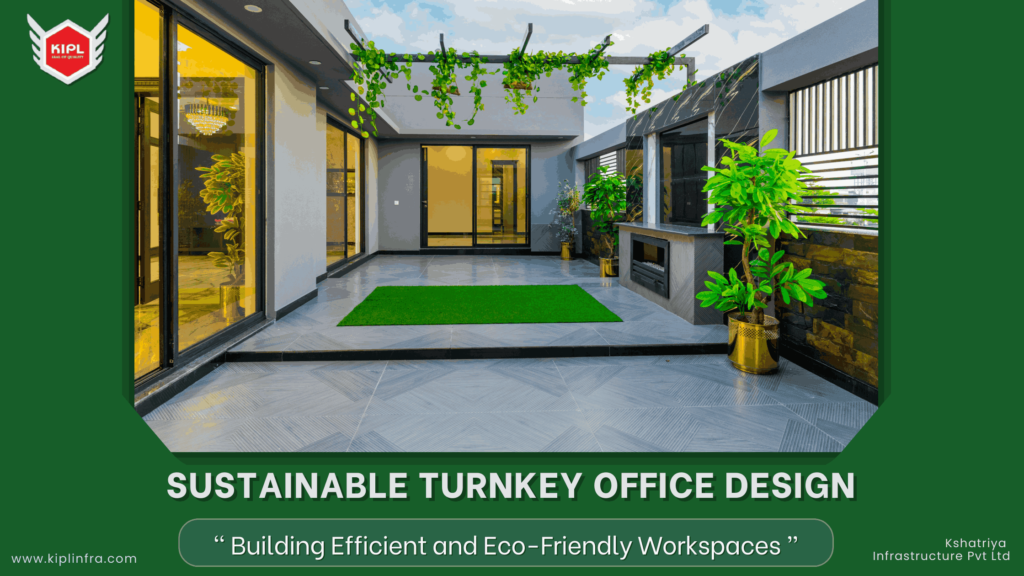
Sustainable turnkey office design has emerged as a defining factor in how modern businesses in Mumbai and across India plan, execute, and operate their workspaces. As commercial hubs expand and corporate footprints grow denser, organizations are increasingly recognizing that office interiors must go beyond visual appeal and operational efficiency. Today’s workplaces are expected to reduce environmental impact, support employee well-being, and align with long-term business sustainability goals. Turnkey office design, when combined with sustainable practices, offers an integrated approach that allows companies to build efficient, eco-friendly workspaces without compromising on quality, timelines, or performance.
Mumbai, being India’s financial and commercial capital, faces unique challenges related to space constraints, rising energy consumption, waste generation, and regulatory compliance. Sustainable turnkey interior solutions address these challenges by integrating environmentally responsible design principles from the earliest planning stages through final execution. Unlike fragmented project approaches, turnkey office design ensures that sustainability is embedded holistically across design development, material selection, procurement, construction, and handover. This seamless integration plays a critical role in creating future-ready offices that are both operationally efficient and environmentally responsible. At the core of sustainable turnkey office design lies intelligent planning. Efficient space utilization is a priority for businesses operating in Mumbai’s high-cost real estate environment. Sustainable space planning focuses on maximizing usable areas while minimizing unnecessary construction, partitions, and material wastage. Flexible layouts, modular workstations, and adaptable meeting spaces allow offices to evolve without frequent renovations, significantly reducing long-term resource consumption. By designing for adaptability, companies can extend the lifecycle of their interiors, lowering both environmental impact and operational costs.
Energy efficiency is another cornerstone of eco-friendly office design. In Mumbai and other major Indian cities, commercial buildings account for a substantial share of electricity usage, driven by lighting, HVAC systems, and office equipment. Sustainable turnkey design incorporates energy-efficient lighting systems such as LED fixtures, motion sensors, and daylight-responsive controls to reduce power consumption. Optimized HVAC planning, including efficient air distribution, zoning, and smart temperature controls, ensures thermal comfort while minimizing energy wastage. When energy efficiency is planned at the design stage rather than added later, offices achieve better performance with lower operating expenses. Material selection plays a decisive role in sustainable turnkey office interiors. Eco-friendly materials with low environmental impact are increasingly preferred for modern commercial projects. These include low-VOC paints, recycled or rapidly renewable materials, responsibly sourced wood products, and energy-efficient glazing systems. In Mumbai’s corporate interiors market, sustainable material choices not only contribute to green building objectives but also improve indoor air quality, creating healthier work environments for employees. Turnkey execution ensures that such materials are consistently specified, sourced, and installed according to sustainability standards, avoiding substitutions that could compromise environmental performance. Water efficiency is often overlooked in office interiors, yet it is a critical sustainability factor, particularly in urban India where water scarcity is a growing concern. Sustainable turnkey office design integrates water-saving fixtures such as low-flow faucets, sensor-based taps, and efficient plumbing layouts that reduce consumption without affecting user comfort. In larger commercial developments, design coordination may also support rainwater harvesting systems and water recycling infrastructure, contributing to responsible resource management. When water efficiency is planned alongside architectural and MEP coordination, offices achieve measurable reductions in operational water usage.
Waste reduction during construction is a major advantage of turnkey project execution. Traditional interior projects often generate excessive waste due to poor coordination between designers, contractors, and suppliers. Sustainable turnkey office design minimizes this issue through precise planning, accurate material estimation, and streamlined procurement processes. Prefabricated elements, modular furniture systems, and controlled installation methods significantly reduce on-site waste. In Mumbai’s dense commercial areas, where waste disposal logistics are complex, reducing construction debris also improves site safety and project efficiency. Employee well-being is a central objective of eco-friendly office design. Sustainable interiors prioritize natural light, improved air circulation, acoustic comfort, and ergonomic planning to create healthier workplaces. Studies consistently show that well-designed sustainable offices enhance employee productivity, reduce absenteeism, and improve overall job satisfaction. In India’s competitive corporate landscape, where talent retention is critical, businesses increasingly view sustainable office design as an investment in human capital rather than an added cost.
Turnkey office design further strengthens sustainability outcomes by ensuring accountability across all project stages. With a single point of responsibility, project teams maintain consistent sustainability goals from concept to completion. This approach eliminates coordination gaps that often arise when multiple vendors handle design, construction, and services independently. In Mumbai’s fast-paced commercial environment, where project delays and budget overruns are common, turnkey execution offers clarity, control, and predictability while maintaining environmental commitments. Technology integration has become an essential component of sustainable office interiors. Smart building systems enable real-time monitoring and optimization of energy usage, lighting levels, air quality, and occupancy patterns. Sustainable turnkey office design incorporates these technologies seamlessly, ensuring that systems are compatible and scalable. In Indian metro cities, where energy costs continue to rise, smart technology not only supports sustainability objectives but also delivers tangible cost savings over the life of the office.
Regulatory compliance and green building certifications are increasingly influencing commercial office design decisions in India. Sustainable turnkey solutions simplify compliance with local building codes, environmental regulations, and voluntary green standards such as LEED and IGBC. By aligning design and execution with these frameworks, businesses enhance their corporate reputation and demonstrate environmental responsibility to stakeholders, investors, and clients. In Mumbai’s competitive commercial real estate market, certified sustainable offices often enjoy higher asset value and tenant appeal. Cost efficiency is a common concern when discussing sustainable interiors, yet turnkey execution proves that eco-friendly design can be financially viable. While some sustainable materials and systems may have higher upfront costs, their long-term benefits in reduced energy consumption, lower maintenance expenses, and extended lifecycle value often outweigh initial investments. Turnkey project management ensures accurate budgeting, lifecycle cost analysis, and value engineering, enabling businesses to make informed decisions that balance sustainability with financial performance. The scalability of sustainable turnkey office design makes it suitable for organizations of all sizes, from growing startups to large multinational corporations. In Mumbai and other Indian cities experiencing rapid business expansion, companies require office interiors that can accommodate growth without repeated disruptions. Sustainable design principles, when integrated into turnkey execution, allow offices to scale efficiently while maintaining environmental performance and design consistency.
As India continues its transition toward greener urban development, sustainable turnkey office design is set to play a pivotal role in shaping the future of commercial interiors. Businesses that embrace this approach are better positioned to meet regulatory expectations, reduce operational risks, and align with global sustainability trends. In Mumbai, where infrastructure pressures and environmental challenges are particularly acute, eco-friendly turnkey office solutions offer a practical pathway toward responsible growth. Ultimately, sustainable turnkey office design represents a strategic convergence of efficiency, responsibility, and innovation. By integrating sustainability into every stage of office planning and execution, businesses can create workspaces that support productivity, enhance brand credibility, and contribute positively to the environment. In the evolving corporate landscape of Mumbai and India, eco-friendly turnkey interiors are no longer a niche preference but a defining standard for future-ready workplaces.
WhatsApp us
